At dawn, when the mist still hangs over the river and the first light brushes the water in gold, Cai Rang Floating Market Can Tho comes alive. Wooden boats glide across the gentle currents, loaded with tropical fruits, vegetables, and the vibrant chatter of traders calling out their wares.
This isn’t a performance or a tourist show — it’s real life on the Mekong. The market has been a thriving center of commerce for over a century, and today, it remains one of the most authentic ways to experience the soul of southern Vietnam.
For travelers seeking genuine connection and culture, Cai Rang Floating Market Can Tho offers a mesmerizing look into a way of life that has flowed with the river for generations.

A Living Tradition on the Water
Situated just 6 kilometers from Can Tho’s city center, Cai Rang Floating Market Can Tho is the largest and most famous floating market in the Mekong Delta. It dates back to the early 20th century, when roads were scarce and waterways served as the main trade routes for goods and produce.
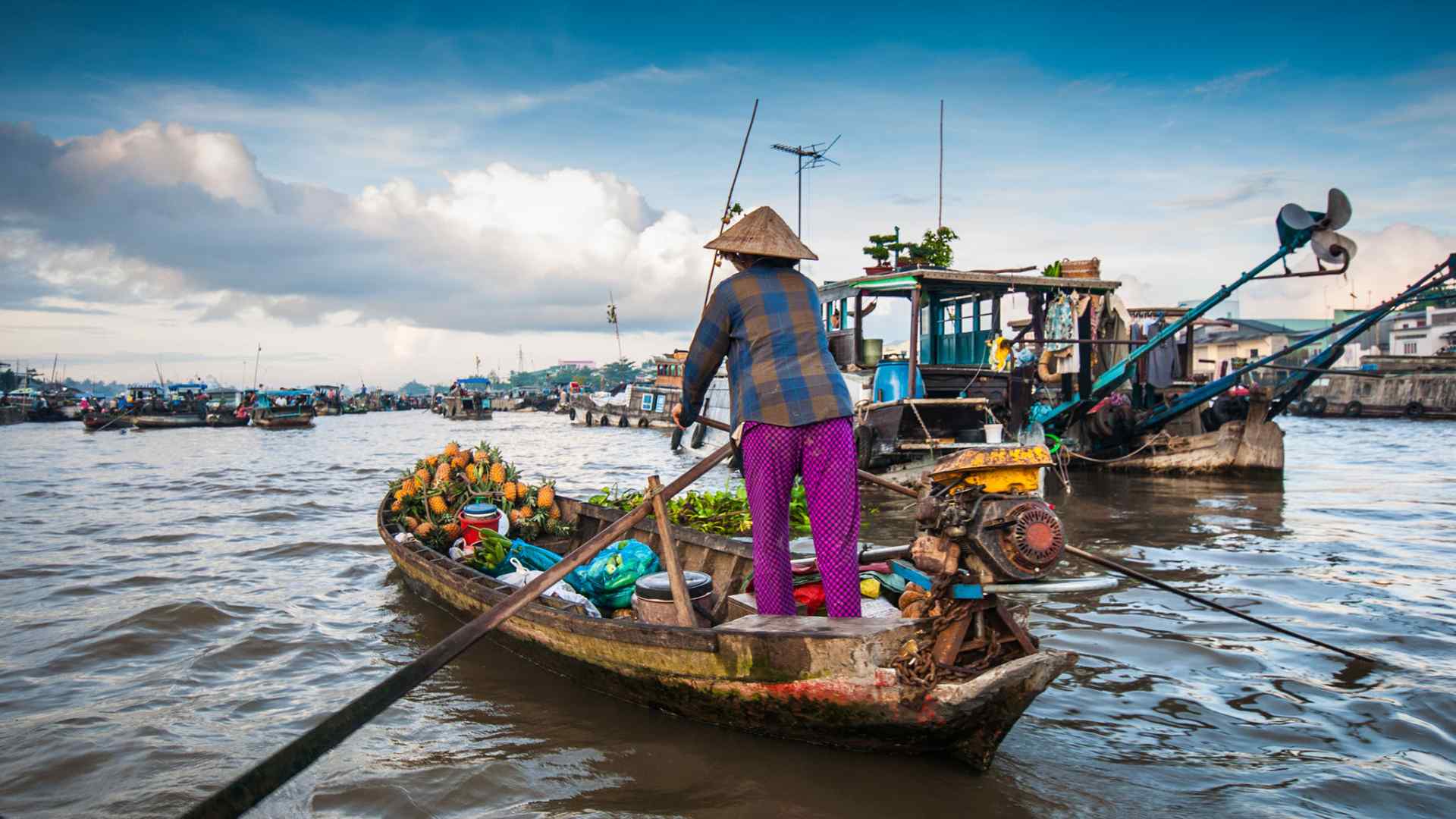
Even today, hundreds of boats gather each morning to exchange fruits, rice, flowers, and handicrafts. Locals navigate the river with ease, their movements practiced and rhythmic, their boats decorated with bright paint and weathered charm.
The market typically starts around 5:00 AM and peaks between 6:00 and 8:00 AM — when the river becomes a floating maze of color and motion.
What to Expect at Cai Rang Floating Market Can Tho
1. The Energy of the Morning Trade
The first thing you’ll notice is the symphony of sounds — engines humming, water splashing, vendors shouting prices, and the laughter of locals greeting one another.
Each boat specializes in particular goods, and sellers advertise by hanging a sample of their products on a long bamboo pole known as a cay beo. A pineapple, watermelon, or pumpkin swaying from the pole instantly tells buyers what’s for sale.
It’s a simple, brilliant system — one that defines the ingenuity and community spirit of Cai Rang Floating Market Can Tho.
2. Floating Breakfasts and Coffee Boats
Amid the trading boats, smaller vendors glide by offering breakfast dishes and drinks. Hungry travelers can enjoy a bowl of hu tieu (noodle soup) or banh mi right on the water.
And then there’s the famous floating coffee — brewed on board and poured into plastic cups as the vendor rows alongside your boat. The aroma of Vietnamese coffee mingling with river air is an experience unlike any other.
These “floating cafés” capture the essence of Cai Rang Floating Market Can Tho — hospitality and adaptability in perfect harmony.
How to Visit Cai Rang Floating Market Can Tho
Most travelers join an early morning boat tour from Ninh Kieu Wharf, departing around 5:00 AM. The journey takes about 30 minutes upstream, as the rising sun paints the river in soft gold.
You can book a shared boat with other travelers or hire a private one for a more personal experience. Local guides often share stories about the river’s history, the market’s traditions, and daily life in the Mekong Delta.
For photographers, morning is the best time — the combination of light, mist, and activity makes for spectacular shots.
Beyond the Market: Exploring the Mekong Lifestyle
While Cai Rang Floating Market Can Tho is the highlight, the surrounding area offers equally fascinating glimpses into delta life.
1. Local Workshops
Many tours include visits to nearby rice noodle factories and fruit gardens. You’ll see how noodles are made by hand and taste tropical fruits freshly picked from the orchards — mango, rambutan, dragon fruit, and longan.
2. Canal Villages
Cruise through narrow canals shaded by coconut palms and stilted homes. Here, time slows down. Locals wave from their porches, and children play beside the water — scenes that define the warmth of the Mekong.
3. Phong Dien Floating Market
If you prefer a quieter, more local experience, consider visiting Phong Dien, a smaller market located about 20 kilometers from Cai Rang. It’s less crowded and more traditional, perfect for travelers seeking authenticity.
When to Visit Cai Rang Floating Market Can Tho
The market operates daily, but the best time to visit is during the dry season (December to April) when the weather is cooler and the river conditions are ideal.
Arriving early is essential — by 9:00 AM, most trading winds down as the heat sets in. For photographers, the early morning mist and soft light create an atmosphere that’s almost dreamlike.
During the flooding season (May to November), the river swells, offering a different but equally stunning perspective of life in the delta.
Tips for Visiting
- Start Early: Leave your hotel before 5:00 AM to catch the market at its liveliest.
- Bring Cash: Some vendors accept small bills for snacks or coffee.
- Respect Locals: Ask before taking close-up photos, especially of traders at work.
- Stay Safe: Move carefully between boats and wear light, non-slip footwear.
- Support Small Businesses: Buying from local vendors directly helps sustain their traditional livelihoods.
Why Cai Rang Floating Market Can Tho Is Unmissable
Cai Rang Floating Market Can Tho isn’t just a tourist attraction — it’s a living piece of Vietnam’s heritage. It embodies the essence of the Mekong Delta: resilience, creativity, and community.
Here, you’ll witness an extraordinary connection between people and water — how an entire society thrives in motion, guided by tides, trade, and tradition.
The experience is deeply human. The laughter of a vendor, the sizzle of breakfast noodles, the aroma of coffee drifting through the mist — each moment tells the story of life shaped by the river.
Final Thoughts
To visit Cai Rang Floating Market Can Tho is to step into another rhythm — one where time is measured by the rise of the sun and the flow of the water. It’s a place that shows Vietnam’s soul not through monuments or museums, but through daily life lived with grace and grit.
As your boat drifts among the traders, the sounds of engines and laughter blending into the river breeze, you’ll understand why this floating market isn’t just a destination — it’s a memory that stays with you long after you’ve left the delta behind.